Winter in Northwestern Wisconsin brings snow loads, ice storms, and brutal cold — all of which can stress, damage, and topple trees. But winter is also the best time for many tree services. Here’s what homeowners across Burnett, Polk, and Washburn Counties should know about caring for trees in the colder months.
Why Winter Is Actually a Great Time for Tree Work
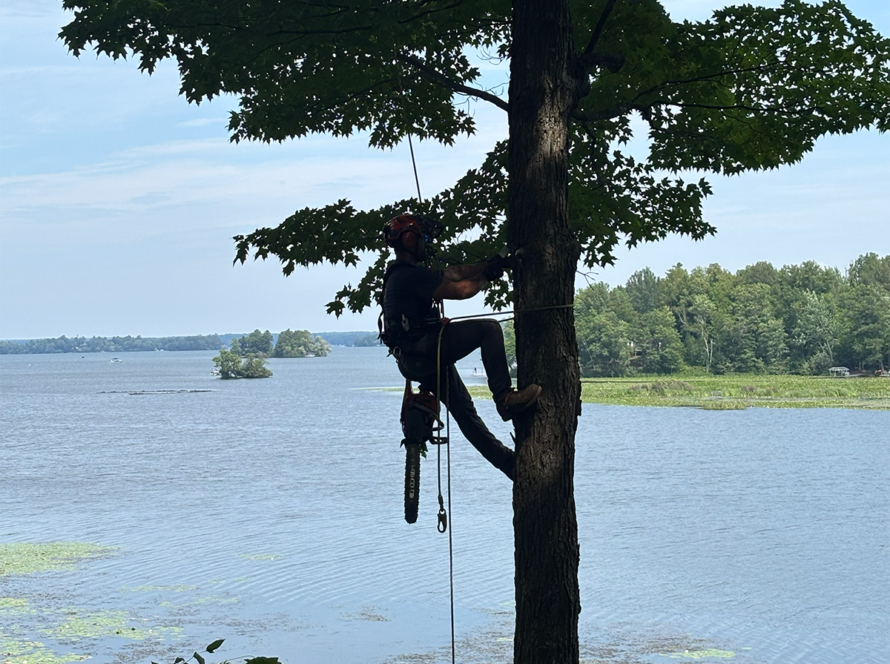
Counter-intuitive but true: winter is one of the best times to schedule tree removal and pruning. Here’s why: frozen ground supports heavy equipment without damaging your lawn. Leaf-off conditions allow better visibility of the tree’s structure, making assessment and removal safer. Dormant trees have reduced sap flow, which reduces disease transmission risk (especially for oaks — see our oak wilt article). Many tree services are less busy in winter, which can mean faster scheduling and sometimes better pricing. If you’ve been putting off tree work, winter is an ideal time to get it done.
Ice Storm Damage: What to Do and What Not to Do
Ice storms are one of the most destructive weather events for trees. A single ice storm can add hundreds of pounds to a tree’s branches, causing catastrophic splits and failures. After an ice storm: Don’t try to shake ice off branches — the vibration can cause already-stressed limbs to snap suddenly. Don’t try to cut loaded, bent limbs yourself — compressed wood under load releases enormous energy when cut. Do photograph all damage for insurance documentation before any cleanup. Do call a professional for any limbs threatening structures, vehicles, or power lines.
Snow Load: When Trees Need Help
Heavy wet snow accumulation can break limbs and bend young trees. For young, flexible trees (especially arborvitae, spruce, and columnar varieties), you can carefully brush snow off branches using an upward sweeping motion — never downward, which adds force to already-loaded branches. Mature trees don’t typically need snow brushing. If a branch has already bent severely, leave it — forcing it back into position can cause the wood to crack. Let it thaw and assess the damage afterward.
Winter Pruning: Best Time for Most Wisconsin Trees
Late winter (February–March in Wisconsin) is the ideal pruning window for most hardwoods. The tree is dormant but spring growth is approaching, which means pruning wounds heal quickly when new growth begins. This timing also avoids the insect activity that can exploit fresh cuts during the growing season. Oaks should only be pruned November through March to prevent oak wilt. Most other shade trees — elms, maples, lindens, ashes — can be pruned throughout dormancy. We’re available for winter pruning and removal year-round.
Hazardous Trees: Don’t Wait Until Spring
Many homeowners assume they should wait until spring to deal with hazardous trees. This is a mistake. A dead or severely compromised tree doesn’t become safer in winter — in fact, ice accumulation and wind load make it more dangerous. If a tree is leaning toward your home, showing significant decay, or has lost major structural limbs, get it assessed and scheduled for removal as soon as possible. Waiting until spring doesn’t save money — it just extends your risk exposure.
Protecting Young Trees from Winter Damage
Young, newly planted trees benefit from a few winter preparations: Apply 2–4 inches of wood chip mulch around the base (keeping it away from the trunk) to insulate roots from freeze-thaw cycles. Wrap thin-barked young trees (especially young maples) with tree wrap to prevent sunscald — a condition where the bark heats on sunny winter days and then rapidly freezes at night, causing vertical bark splits. Remove tree wrap in spring to prevent moisture buildup. Stake young trees that aren’t yet anchored if your property is exposed to high winds.