The emerald ash borer (EAB) has killed hundreds of millions of ash trees across North America — and it’s well-established across Wisconsin. If you have ash trees on your property in Burnett, Polk, or Washburn County, here’s what you need to know to protect yourself, your property, and your finances.
What Is the Emerald Ash Borer?
The emerald ash borer is an invasive beetle native to Asia that was first detected in the U.S. in Michigan in 2002. It has since spread to 35+ states and all of Wisconsin. Adult beetles are metallic green and about half an inch long. They’re not the problem — their larvae are. EAB larvae tunnel under the bark and feed on the inner wood (phloem and cambium) that carries nutrients and water through the tree. This feeding disrupts the tree’s vascular system and essentially starves the tree to death. An untreated ash tree infested with EAB will typically die within 3–5 years.
How to Identify EAB Infestation
Signs of EAB infestation include: S-shaped larval galleries visible under peeling bark, D-shaped exit holes (about 1/8 inch wide) in the bark, crown dieback starting at the top of the tree, epicormic sprouts (new shoots growing directly from the trunk — the tree’s stress response), woodpecker damage from birds feeding on larvae, and bark splitting over galleries. EAB targets all North American ash species (green, white, black, blue, pumpkin). If you have ash trees, assume they’re at risk.
Treatment Options: Is It Worth Treating?
Insecticide treatments can protect ash trees from EAB — but only if started before infestation or in the early stages. Soil injections, trunk injections, and bark spray applications of systemic insecticides (such as emamectin benzoate or imidacloprid) can be effective. The key question is whether the tree is worth the ongoing treatment cost. Ash trees with more than 50% crown dieback are generally not worth treating — the damage is too extensive. Healthy ash trees with significant value (large, mature specimens in prominent locations) may warrant a long-term treatment program. We recommend consulting with your local extension service and a professional arborist before investing in treatment.
When to Remove Ash Trees
If your ash tree has significant crown dieback (30%+), visible larval galleries, or is in decline, removal should be scheduled before the tree dies and becomes hazardous. Dead ash trees deteriorate rapidly. The wood becomes brittle and unpredictable — branches break without warning, and felling a dead ash requires considerably more skill and risk management than a living tree. Ash trees near structures, roads, or high-traffic areas should be prioritized for removal as soon as decline is observed. Removal while the tree retains some structural integrity is safer and often less expensive.
What About the Wood?
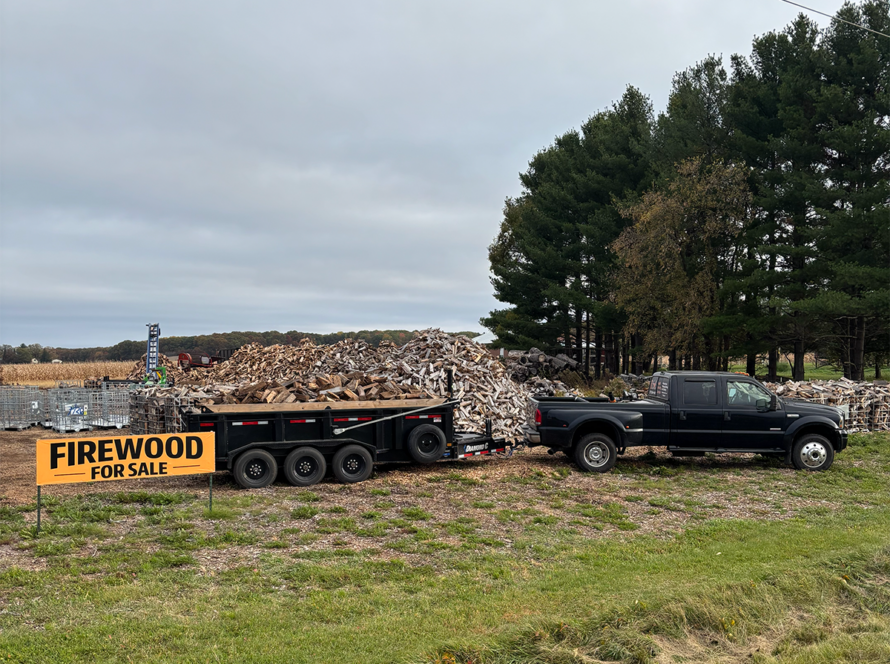
Ash is excellent firewood — dense, high BTU, and it splits well. EAB-infested ash wood is safe to use locally but should not be moved out of the quarantine zone (most of Wisconsin is already under quarantine). We can leave firewood cut and split on-site, or haul everything away — your choice. Do not transport ash firewood to cabins or campgrounds in non-quarantine areas, as this can spread EAB to new locations.
Get a Free Assessment for Your Ash Trees
If you have ash trees and aren’t sure of their health status, call Roufs Tree Service for a free on-site assessment. We’ll evaluate the degree of infestation or decline, advise you on whether treatment is viable, and give you an honest recommendation — whether that’s a treatment plan or a removal timeline. Don’t wait until your ash trees are dead — removal gets harder, more expensive, and more dangerous as the wood deteriorates.